close
Choose Your Site
Global
Social Media
Views: 0 Author: Site Editor Publish Time: 2026-06-12 Origin: Site
The consumer shift toward sustainable, plant-based pet products is accelerating rapidly across global markets. Pet owners increasingly reject harsh chemicals and artificial clay products. However, finding a substrate balancing ecological claims and clumping performance remains a profound supply chain challenge. Brands often struggle between offering green solutions and satisfying demanding buyers.
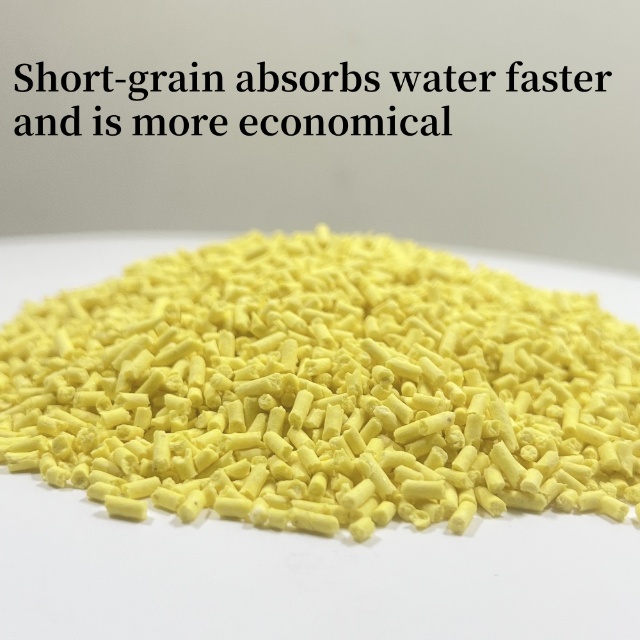
Short-grain millet is emerging as a highly commercially viable alternative. It directly replaces traditional bentonite and generic tofu litters. Crushed millet provides specific, measurable advantages in moisture absorption. It also excels in ambient odor control, bridging the gap between raw natural ingredients and high functionality.
This guide delivers a direct, evidence-based evaluation of short-grain millet litter. We detail critical performance metrics and conduct strict material comparisons. You will discover the exact operational requirements needed for successful bulk sourcing. This knowledge ultimately empowers your private label purchasing decisions.
Performance: Short-grain crushing increases the surface area of millet litter, resulting in faster moisture absorption and tighter clumps compared to whole-grain or pelleted alternatives.
Market Positioning: Acts as a premium, low-dust, and highly flushable option within the natural cat litter category.
Sourcing Realities: Procuring millet cat litter wholesale requires vetting suppliers for dust-extraction capabilities, moisture control (<10%), and reliable OEM packaging options.
Scalability: Bulk purchasing demands strict attention to MOQs, weight-to-volume shipping ratios, and necessary export/import certifications (e.g., SGS).
What exactly is short-grain or crushed millet litter? Manufacturers create it by utilizing agricultural byproducts. Factories process natural millet grains and husks to achieve optimal density. Industrial rollers fracture the whole seed deliberately. This exposes the highly absorbent starchy interior. The outer husk provides structural friction. They mechanically crush the raw material into smaller, irregular pieces. This specific manufacturing step fundamentally changes the physical behavior of the substrate.
Smaller grain sizes eliminate unnecessary air gaps in the litter box. When cats urinate, the liquid hits a dense surface. The crushed texture traps liquid significantly faster than large pellets. It effectively prevents urine from pooling at the bottom. Bottom pooling creates stubborn, foul-smelling cement. Fast surface clumping preserves the remaining clean litter and reduces daily scooping effort.
Brands must move beyond empty marketing buzzwords. True environmental footprints dictate long-term market success. Short-grain millet acts as a completely biodegradable product. Consumers can compost it safely where local regulations permit. Rapid water dissolution makes it highly septic-safe and flushable. You can confidently market this eco friendly litter to environmentally conscious buyers seeking authentic sustainability.
High performance matters, but feline acceptance dictates sales. Crushed millet offers a distinctly soft paw feel. Pelleted litters often irritate sensitive paws. Older cats or declawed cats frequently reject hard surfaces. Millet mimics the texture of natural outdoor sand. This reduces cat rejection rates drastically. High acceptance becomes a critical metric for your long-term customer retention.
Plant-based alternatives dominate modern pet care aisles. However, not all substrates perform equally under real-world household conditions.
Industry buyers frequently worry about aflatoxins in corn substrates. Corn carries high mold risks in humid environments. Millet presents a naturally lower risk profile regarding fungal toxins. It also provides a distinct, less polarizing natural scent. Many consumers complain about the sour smell of wet corn. Millet remains neutral.
Hemp cultivation uses very little water and boasts excellent sustainability metrics. Hemp absorbs liquid exceptionally well. Yet, short-grain millet litter clusters much more cohesively. It forms solid, scoopable balls quickly. Some hemp formulas rely purely on absorption without tight clumping. Users must scrape out loose, soggy patches. Pet owners prioritize daily convenience, and millet keeps the litter box cleaner.
You must compare manufacturing costs and structural integrity against tofu. Tofu litters rely on pea or soy dregs. Guar gum binds these dregs into pellets. Fluctuating guar gum prices impact your profit margins. Extruded tofu rods sometimes crumble under heavy foot traffic. Millet requires fewer added binders. It offers a more natural, sand-like texture and outlasts generic tofu in structural durability.
Brands should choose millet when targeting premium audiences. It serves perfectly when consumers demand fast clumping, zero artificial binders, and superior paw comfort.
Feature | Short-Grain Millet | Corn | Pelleted Hemp | Extruded Tofu |
|---|---|---|---|---|
Clumping Speed | Very Fast (Surface trapping) | Fast | Slow to None | Moderate |
Odor Control | Excellent (Enzymatic) | Moderate (Can sour) | Good | Good |
Paw Texture | Soft, Sand-like | Granular | Hard Pellets | Cylindrical Rods |
Aflatoxin Risk | Very Low | High Risk | Low Risk | Low Risk |
Note to buyers: Always request these baseline metrics when evaluating a new factory.
You must evaluate raw physical data before finalizing any purchasing agreements.
Dust Content: Factories must mechanically de-dust the raw material. Final dust content must stay strictly below 1%. This vital metric supports respiratory health claims for sensitive pets and owners.
Moisture Content: Suppliers should securely control internal moisture. Target levels typically sit below 10%. Excess moisture invites mold during lengthy international transit. Low moisture safely extends the retail shelf life.
Absorption Rate: Establish clear baseline expectations early. The premium material should absorb 200-300% of its own weight. High absorption directly reduces the total volume consumers use monthly.
Physical specs mean nothing without daily functional reliability in the litter box.
Odor Control Mechanism: Rely on natural enzymatic odor-trapping. Avoid adding harsh artificial fragrances. We strongly recommend unscented versions or natural botanical blends. Premium markets actively reject synthetic chemical smells.
Clump Strength: Implement strict drop-test resilience standards. Operators form a clump using 20ml of saline solution. They wait exactly three minutes. They drop the clump from a one-meter height onto a hard floor. Solid clumps must survive this drop intact without shattering. This proves they will survive aggressive scooping.
Scaling your brand requires flawless procurement strategies and risk mitigation.
Understand standard industry expectations. When ordering short grain litter bulk, suppliers mandate strict minimum volumes. Expect a minimum order of one 20ft or 40ft HQ container. A 20ft container generally holds around 12 to 14 tons. These minimums offset factory setup costs. They also optimize your unit shipping costs significantly.
Great factories offer deep customization for your brand. You can mix millet with other substrates easily. Factories often blend it with a percentage of bentonite. Mixing it with tofu creates a highly functional hybrid product. Packaging options require careful consideration. Custom packaging demands separate MOQs. Factories might print 10,000 bags minimum. You must finance this packaging inventory upfront.
Vacuum-sealed bags reduce transit damage and dust friction. However, vacuum sealing demands thicker plastic films. Thin films puncture easily during palletization. Pinholes let in humid sea air. The litter expands and ruins the visual appeal. Kraft paper bags boost the eco-friendly aesthetic perfectly. Bulk woven sacks work wonderfully for domestic repacking facilities.
Global trade carries inherent quality assurance risks. Inconsistent grain sizing leads to heavy household tracking. Require detailed sieve analysis reports. Review these documents carefully before approving the golden sample. Pest infestation plagues many natural plant materials. Verify the manufacturer utilizes high-temperature sterilization processes. Flash heating eliminates eggs and bacteria completely. Reliable suppliers of millet cat litter wholesale provide transparent sterilization certificates.
Managing overseas suppliers demands strict oversight and verified credentials.
Know exactly what factory certifications to look for. Request ISO 9001 quality management certificates. Ask for BSCI social compliance audits. European buyers demand BSCI to ensure ethical labor practices. Specific pet product export licenses prove legal operating status.
Never rely solely on factory promises. Demand independent lab reports. SGS or CE equivalents remain the global gold standard. They confirm the total absence of heavy metals like arsenic and lead. They also rule out dangerous pesticides, Salmonella, and E. coli. A truly safe natural cat litter must pass these rigorous toxicology screens.
Agricultural realities dictate production schedules. Factor in seasonal millet harvests. Millet is an annual crop. Prices fluctuate based on regional harvest yields. Secure long-term pricing contracts during peak harvest months. Plant-based litters require specific drying and processing times. Plan your inventory buffers accordingly to avoid off-season premiums.
Compliance Category | Required Documentation | Business Impact |
|---|---|---|
Quality Management | ISO 9001 Certificate | Ensures consistent batch-to-batch production standards. |
Social Compliance | BSCI Audit Report | Protects brand reputation from unethical labor scandals. |
Toxicology & Safety | SGS Heavy Metal & Pesticide Screen | Prevents pet poisoning and avoids costly product recalls. |
Biological Safety | Sterilization Certificate | Eliminates pest infestations during maritime transit. |
Short-grain millet litter bridges a massive industry gap seamlessly. It combines high-performance clumping with genuine environmental sustainability. It offers B2B buyers a powerful product tailored for the premium pet care segment. You can deliver exceptional odor control without sacrificing ecological values or feline comfort.
Advise your procurement team to act systematically. Request a detailed specification sheet from potential suppliers today. Arrange a 5kg sample for internal clumping and odor-control tests. Always audit supplier sterilization protocols before signing any bulk contracts. Taking these deliberate steps ensures a smooth, profitable supply chain expansion.
A: Shelf life typically ranges from 12 to 24 months. You must keep it vacuum-sealed. Store the product securely in a dry, temperature-controlled environment. High humidity degrades the natural plant fibers quickly and ruins the vacuum seal.
A: Yes, absolutely. Factories frequently blend crushed millet with tofu or cassava. This strategy optimizes manufacturing costs effectively. It improves overall clumping speed and significantly reduces paw tracking around the house.
A: Millet is significantly lighter than clay bentonite. This lower density maximizes container space utilization. It drastically reduces overseas shipping costs per retail unit. Lighter retail bags also improve the everyday customer experience.
A: Yes, you can flush it in small, single-clump quantities safely. The plant fibers feature rapid water solubility. However, buyers should always verify local municipal plumbing guidelines before printing flushable claims on retail packaging.