
close
Choose Your Site
Global
Social Media
Views: 0 Author: Site Editor Publish Time: 2025-12-03 Origin: Site
As a bamboo stalk of insight in the litter world, using Catit Go Natural Pea Husk Clumping Cat Litter (and other versions of pea husk litters) lets us take a microscope to what exactly goes into a pea husk cat litter—and why that matters for performance, sustainability, and pet comfort. From an industry manufacturer’s vantage point, let’s walk through the ingredients, their functions, advantages, and considerations—so you better understand how this product category is constructed and why it’s gaining traction.
At the heart of pea husk cat litter is the humble pea husk—the fibrous shell or “outer skin” left after peas are harvested and processed. Many pea husk litters note they are made from “recycled” pea husks which might otherwise have been discarded.
Why pea husk? Because:
It’s plant based and renewable (peas are widely farmed).
The fibrous structure lends itself to pelletizing or forming into granules.
It has natural absorbency qualities—especially when processed properly.
It offers a cleaner “alternative” to traditional clay litters or silica gels (for markets looking for more sustainable, natural choices).
From a manufacturing perspective (speaking as a supplier), sourcing clean, consistent pea husks is foundational. Moisture content, fibre consistency, absence of contaminants (pesticides, heavy metals) must be verified. Then the husks are processed—dried, milled or pelletized—to become the base substrate for the litter.
Once you have a pea‐husk base, the performance attributes (clumping, odor control, dust reduction) often come from additional ingredients. Review of existing products shows the following commonly used components:
Ingredient | Function in the Litter |
Food grade starch (e.g., corn or potato starch) | Acts as a binder or “clumping agent” when moisture is introduced. Example: “starch” listed in ingredients of Catit pea husk litter. |
Corn powder (cornmeal or corn flour) | Similar role as starch; helps absorb and support clump formation. |
Guar gum (or other plant gums) | Helps bind particles together when wetted; enhances clumping. The Catit formula specifically mentions guar gum. |
Baking soda (sodium bicarbonate) | Optionally added for odor control. One listing shows “baking soda for odor control.” |
Sometimes subtle fragrance or food grade dye | To offset any “plant smell” from the husk or give a mild scent to the litter. Not always ideal for pet sensitivity, so usage and labeling are important. Example: one version is vanilla or lavender scented. |
In short: the substrate (pea husk) + clumping aid (starch/corn/guar) + optional odor control (baking soda) + possible scent = the typical ingredient architecture.
From the supplier’s view, each ingredient must meet regulatory standards (food grade or safe for pet contact), be free from contaminants, and be engineered for processing (pelletizing, drying, screening dust, packaging). Quality control around dust levels, pellet size and integrity is essential.
Let’s map ingredient functions into performance outcomes—this helps you see why each ingredient exists and what to look for.
Pea husk fibres absorb moisture; then when combined with starch/corn powder/guar gum, they form clumps that hold together. For example, one product claims pellet sized ~1.5 mm diameter leads to ~300% absorbency (i.e., absorbs approx three times its weight) in moisture.
Clumping is beneficial because it means easier scooping, less mess, better user experience.
Because the base is fibrous plant material rather than fine clay dust, and because pellet size is controlled, many pea husk litters claim very low dust. Example: 99% dust free is claimed in one listing.
Using a substrate with larger particle size and less friable dust helps minimize airborne particles, which is better for pets and owners (especially those with allergies).
Plant based substrates can help mask or absorb odors; baking soda helps neutralize ammonia/urine smells. Combined with pellet clumping, this improves litter box experience for both cats and humans. Also the pellet texture is often described as gentler on paws, which matters for pet comfort.
From a supplier/brand standpoint, using recycled pea husks (previously waste material) gives a sustainability narrative—appealing in many markets. Also, being plant based (versus mined clay or silica) is a differentiator.
From a manufacturer’s lens, here are some check points you’d want to verify (and if you’re a buyer or brand, you’ll want to ask your supplier about these):
Proportion of pea husk vs other ingredients
How much of the litter is truly pea husk? Are the additives minimal or are they dominating? A higher % of substrate means better “natural” claim.
Quality of pea husk raw material
Are the husks clean, from known pea farms?
Is there screening for pesticide residues or heavy metals?
Moisture content (dried husks help prevent mold or bacterial growth).
Clumping agent specifics
What type of starch/corn/guar gum is used? Are they food grade? Any risk of microbial growth? Does the binder produce clumps that hold in actual use (urine/solid waste)? Performance tests (absorbency, clump strength) are useful.
Odor control ingredients
Is baking soda included? Are there fragrances or dyes? For sensitive pets, simpler is often better (and some cats dislike scented litters). Also check that odor control is effective in real conditions.
Pellet size, dust screening, and processing
What is the pellet diameter? Smaller may absorb faster but might track more.
Dust level: How much dust is generated when pouring or scooping?
Pellet integrity: Do pellets break easily or fall apart (which reduces clump strength)?
Environmental claims and biodegradability
If you market the litter as “biodegradable” or “flushable,” then testing/verification is needed. Some pea husk litters claim flushability, but local plumbing regulations vary. Check compostability or biodegradation data.
Safety for pets
Clearly, since this is for cats, ingredients must be non toxic, odour/scent safe, and comfortable for paws. The plant substrate should be free from contaminants and the binder should not release harmful residues.
Cost and scale of production
From a supply side: pea husk litter may cost more than basic clay litter (due to raw material processing, pelletizing, added binders). Assess cost vs performance trade off for your brand positioning.
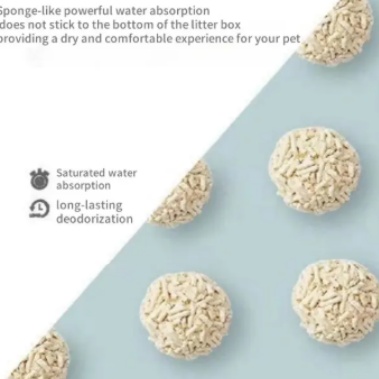
Here’s a typical ingredient breakdown, drawn from publicly available info. It’s illustrative:
Pea husks (recycled outer pea fibre)
Starch (food grade)
Corn powder / corn flour
Guar gum (plant based binder)
Baking soda (odor control)
Optional: scent (vanilla/lavender) & food grade dye
For instance, one manufacturer lists “Natural pea husks, cornstarch, plant fibers, guar gum (natural clumping agent), and baking soda for odor control.”
Another lists: “Pea husks … starch, corn powder, and guar gum.”
As you can see, the ingredient list is fairly concise—still you should verify that “plant fibers” aren’t vague placeholder for unspecified material, and that the scents/dyes are acceptable for your market and pets.
Differentiation
A litter made from pea husks offers a story—plant based, recycled raw material, renewable, less mined clay. For brands targeting “eco”, “natural”, “pet friendly” markets, this is appealing. The ingredient system supports those claims (provided they are verified).
Performance link
Because the ingredients work: pea husk + binder = good clumping; starch/corn + binder = efficient absorbency; baking soda + template = odor control. So ingredient composition directly links to performance attributes that consumers care about (clumping, dust, odor, comfort).
Supply chain & cost considerations
From supplier vantage: sourcing consistent, high quality pea husk is vital. Processing into pellet form, controlling dust, ensuring binders are food grade—all add cost and complexity. Brands should consider the cost implications but balance that with premium pricing or performance differentiation.
Market positioning & claims
Ingredient structure allows for claims like “plant based”, “biodegradable”, “low dust”, “recycled material”. These are strong marketing hooks—but they must be backed by ingredient transparency and third party verification to avoid green washing. For example, verifying that the pea husk is indeed recycled and meets material safety standards.
Risk management
Because this is a novel substrate compared to standard clay litters, you’ll want to ensure user acceptance (cats will use it), supply stability, regulatory compliance (in different countries), and verify that the ingredients present no hazards (dust inhalation, paw comfort, disposal issues).
In the evolving world of pet care, plant based substitutes like pea husk litter are more than just a niche—they’re a signal of shifting consumer expectations around sustainability, pet comfort and performance. By understanding the ingredients in pea husk cat litter—especially how the substrate, binders and odor controls work together—you’re in a much stronger position to evaluate, select or develop products that stand out.
If you’d like to explore high quality pea husk substrates, custom formulations, or partnership opportunities, feel free to connect with Zhong Chong Hui (Xuzhou) Biotechnology Co., Ltd. Their expertise in botanical/plant derived materials makes them a solid resource for sourcing consistent, manufactured pea husk litter bases. Whether you’re launching a new brand or upgrading your existing line, they’re ready to help with raw material supply, formulation support and scale up guidance.


