
close
Choose Your Site
Global
Social Media
Views: 0 Author: Site Editor Publish Time: 2026-03-04 Origin: Site
Sustainable cat litter is everywhere in 2026, but which option truly stays green once it reaches your home? Many products claim to be eco-friendly, yet not all deliver real environmental benefits or reliable performance. In this article, we explore Pea Husk Cat Litter from farm byproduct to final disposal. You will learn why it stands out as the most sustainable choice in 2026 and how to choose and use it with confidence.
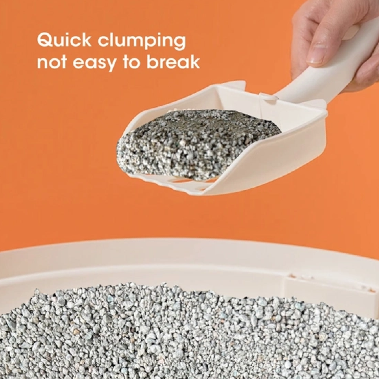
Pea Husk Cat Litter begins as a leftover from food production. Peas are grown for human consumption, and the outer husks are often discarded after processing. Instead of treating this material as waste, manufacturers repurpose it into cat litter. This “scrap-to-solution” model reduces pressure on land and avoids growing crops solely for litter production.
Because pea husk comes from food processing, it does not require additional farmland, fertilizers, or irrigation specifically for litter. This distinction matters. When a litter material is purpose-grown, it competes for agricultural resources. When it is a byproduct, it supports waste diversion and circular resource use.
In simple terms, using leftovers is usually better than creating new demand for raw inputs.
Sustainability depends heavily on sourcing and logistics. If pea husk is collected locally or regionally, transportation emissions can be reduced. Shorter supply chains also increase traceability and quality control.
Brands that openly share sourcing regions and transport strategies demonstrate stronger environmental accountability. Validation required: Some producers report reduced emissions per unit when supply routes are shortened, but buyers should request transparent data to confirm these claims.
The production process is relatively straightforward and scalable. It typically includes:
1. Collection and sorting of husk material
2. Cleaning to remove impurities
3. Grinding or milling to achieve consistent texture
4. Drying to control moisture
5. Sieving for uniform particle size
6. Packaging for storage and distribution
Each step affects product quality. Proper drying improves clumping and odor control. Uniform sizing reduces dust and tracking. Compared with strip mining for clay, this process generally requires fewer heavy extraction operations.
Sustainability claims must go beyond marketing language. In 2026, credible indicators include measurable operational practices such as:
● Use of renewable energy at production facilities
● Reduced water consumption per batch
● Effective dust capture systems
● Recycled or minimized packaging materials
Manufacturers that publish sustainability reports or third-party audits strengthen trust and meet higher EEAT standards.
Environmental benefit is not only about sourcing. It is also about how much litter you use. High absorption and strong clumping reduce full-box changes. Effective odor control prevents early replacement due to smell.
When litter lasts longer, households use fewer bags per month. That means fewer shipments, less packaging waste, and lower total resource consumption. Performance directly influences lifecycle impact.
Plant-based litters like pea husk are often lighter than clay. Lower shipping weight reduces fuel use in distribution. It also improves user experience. Customers can carry it more easily, which encourages repeat purchases and long-term adoption.
Many Pea Husk Cat Litter formulas avoid heavy synthetic fragrances and harsh chemical additives. Lower fragrance levels may benefit sensitive cats and allergy-prone households. Dust levels still vary by brand, so quality control remains important.
Pea husk’s sustainability advantage begins at the farm level and extends through efficient processing and strong daily performance. Its biggest environmental win comes from turning food waste into a reliable household product.
Not all plant-based litters offer the same environmental profile. Input type, processing method, and disposal conditions all influence real impact.
By using food-industry leftovers, pea husk supports waste diversion. Instead of sending husks to disposal or low-value uses, manufacturers transform them into a useful consumer product. This aligns closely with circular economy principles.
Biodegradable materials still depend on disposal conditions. In oxygen-limited landfill environments, decomposition may slow and produce methane. Therefore, biodegradability alone does not guarantee climate benefit. Proper disposal guidance is essential.
Buyers should examine operational transparency rather than rely solely on labels. Key questions include:
● What percentage of plant energy comes from renewable sources?
● How is water usage managed and reduced?
● What packaging materials are used?
● Is dust controlled through filtration systems?
These factors influence the overall environmental footprint.
Many consumers hesitate to switch from clay due to performance concerns. Clear education about clumping quality, odor control, and proper disposal improves trust and retention.
Pea Husk Cat Litter performs well on waste diversion and resource efficiency, but its environmental value depends on transparent manufacturing and responsible disposal.
Practical benefits matter because sustainability must work in daily life, and if litter performs poorly, many customers return to clay. Pea husk fibers absorb moisture effectively, which helps reduce ammonia odor and keeps the litter box fresher over time while supporting better indoor air quality. Strong clumps scoop cleanly and limit contamination of unused litter, whereas weak clumps crumble and create more waste; a simple way to evaluate quality is to test clump firmness at five and twenty minutes after use. Low dust levels improve comfort for both cats and humans, and unscented or lightly scented formulas lower irritation risk while clear ingredient labeling builds trust. Because better performance reduces overall consumption, households often replace litter less frequently, lowering long-term costs and cutting packaging waste; for accurate results, track monthly usage before and after switching. Overall, pea husk delivers practical daily advantages that align environmental responsibility with real household needs.
Clay litter depends on strip mining and energy-intensive processing. It is also heavy to transport. These upstream impacts occur before consumers ever open the bag.
Some plant litters rely on agricultural byproducts. Others depend on crops grown specifically for litter. Scrap-based inputs typically require fewer additional resources.
Organic materials in landfills may generate methane. Therefore, disposal practices significantly influence climate outcomes.
If litter controls odor and clumps efficiently, households replace it less frequently. Lower usage reduces lifecycle impact.
Litter Type | Shipping Weight | Upstream Impact | Key Concern | Sustainability Note |
Clay | High | Mining | Heavy, dusty | High extraction cost |
Pea Husk Cat Litter | Lower | Processing | Brand variation | Scrap-based input |
Other Plant Scrap | Lower | Varies | Inconsistent clumps | Check transparency |
Purpose-Grown Plant | Medium | Farming inputs | Higher cost | Depends on agriculture |
Compared to clay, pea husk reduces mining impact and transport weight. Compared to other plant litters, its scrap-based origin strengthens its sustainability case.
Proper disposal protects environmental benefits.
Even if labeled “flushable,” litter can clog plumbing and stress wastewater systems. The safest default is not to flush.Cat feces may contain parasites such as toxoplasma. Most home compost systems do not reach sufficient temperatures for safe pathogen destruction. Sealed trash disposal remains the safest option.
Question | Recommended Action |
City-approved pet waste composting program? | Follow official instructions |
Septic or older plumbing? | Never flush |
Immunocompromised household members? | Use gloves and sealed trash |
No official compost system? | Avoid backyard composting |
Look for pea husk or pea fiber listed as the primary ingredient. Avoid vague blends and heavy perfumes.
Request sustainability documentation when possible. Evaluate energy, water, and packaging practices.
Stable sourcing protects price consistency. Brands should disclose supplier regions and contingency plans.
Switch litter gradually over one to two weeks:
● Days 1–3: 75% old, 25% pea husk
● Days 4–7: 50% old, 50% pea husk
● Days 8–11: 25% old, 75% pea husk
● Days 12–14: 100% pea husk
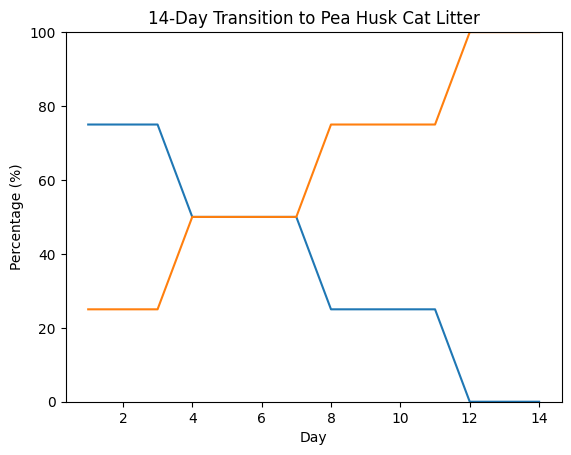
Choose transparent brands, verify production practices, and transition slowly to ensure cat acceptance.
Plastic boxes develop micro-scratches that trap odor. Stainless steel boxes resist absorption and are easier to sanitize. Over time, durable materials reduce replacement waste and improve odor control.
When upgrading the box, keep the litter consistent to avoid overwhelming your cat. Introduce changes gradually.
Pea Husk Cat Litter stands out in 2026 because it begins as a food-production byproduct, requires relatively simple processing, performs efficiently in daily use, and can be disposed of responsibly when proper guidelines are followed. For example, when produced by Zhong Chong Hui (Xuzhou) Biotechnology Co., Ltd., this farm-to-litter-box approach highlights how a manufacturer can turn agricultural leftovers into a practical, high-performing product. Its sustainability advantage is practical, not theoretical. By choosing transparent suppliers like this, avoiding flushing myths, and focusing on performance-driven reduction, households and retailers can support a lower-impact litter system from farm to litter box.
A: Pea Husk Cat Litter is a plant-based litter made from pea husks or pea fiber left over from food processing. Instead of mining clay, it repurposes an agricultural byproduct. This “farm-to-litter-box” origin helps reduce raw material waste and supports a more circular supply chain in 2026.
A: Pea Husk Cat Litter stands out because it starts as a food-production byproduct, avoids the land disruption linked to clay mining, and often weighs less for shipping. Its real sustainability advantage also comes from performance: strong absorption and odor control can reduce how often you replace litter, cutting total consumption and packaging waste over time.
A: To improve acceptance, transition slowly using a mix method for Pea Husk Cat Litter. Start with 75% old litter and 25% pea husk for a few days, then move to 50/50, then 25/75, and finally 100% pea husk over 10–14 days. Keep the box in the same location, and avoid changing box type and litter type on the same day.
A: For best results with Pea Husk Cat Litter, maintain a consistent fill depth (often 2–3 inches), scoop at least once daily, and remove clumps before they break. If odor rises, check whether the litter is staying too damp, whether the box is too small, or whether the room lacks ventilation. Good moisture control usually means a fresher box and fewer full changes.
A: Pea Husk Cat Litter should not be flushed, even if some products suggest it, because litter can contribute to clogs and stress plumbing systems. Composting is also risky for most homes because cat waste may contain pathogens, so the safest default is sealed trash disposal unless your city offers a verified pet-waste composting program.


