
close
Choose Your Site
Global
Social Media
Views: 0 Author: Site Editor Publish Time: 2026-03-11 Origin: Site
Tired of cleaning your floor, only to feel litter grit again by night? Why does it spread so easily through your home? Tracking is not just cat behavior; it depends on particle size and dust. Many owners want cleaner floors without losing clumping or comfort. Pea Husk Cat Litter pellets offer a smarter solution. In this article, you will learn why they reduce tracking and how to keep your floors cleaner.
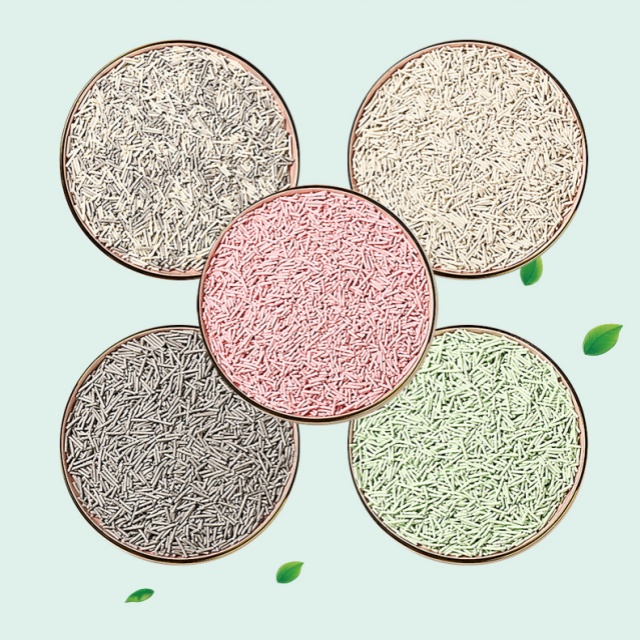
It is important to clarify that “non-tracking” does not mean that zero pieces ever leave the litter box, because any loose material can occasionally move beyond its container. Instead, true non-tracking performance means that particles do not cling easily to paws, dust does not travel through the air, debris falls close to the box rather than spreading across rooms, and cleanup remains quick and manageable.
Fine-grain clay litter often fails these criteria because its sand-like particles can wedge into paw pads, especially when damp, and then detach gradually as the cat walks through the home. Lightweight granules also scatter further when kicked during digging, which increases visible trail distance and daily sweeping frequency. In contrast, pellet-style litter changes the physics of tracking by increasing particle size and weight, which reduces both adhesion and airborne movement.
Pea Husk Cat Litter is typically produced using compressed plant-based fibers formed into uniform pellets, and this structure significantly alters how the litter behaves when cats dig, step, and exit the box. Larger pellets have less surface area in contact with paw pads compared to fine particles, which reduces friction and limits how easily material sticks between toes.
Additionally, pellet density plays a critical role, because heavier particles fall away more quickly once a cat lifts its paw, meaning gravity assists in reducing carry-out. This difference becomes especially noticeable in homes where litter trails previously extended several feet from the box.
The comparison below highlights how pellet structure influences tracking performance:
Feature | Fine-Granule Clay | Pea Husk Pellets |
Particle Size | Very small | Larger, uniform |
Density | Lightweight | Moderate weight |
Paw Adhesion | High | Low |
Dust Output | Moderate to high | Low (varies by brand) |
Scatter Distance | Long | Shorter |
In many user-reported scenarios (validation required), households switching from fine clay to pellet-based litter observe a measurable decrease in visible tracking within the first week, particularly in high-traffic areas near the litter box.
Even the best litter can perform differently depending on household conditions, and understanding common triggers helps set realistic expectations. Long-haired cats often have fur between their toes, which traps small particles more easily than larger pellets, so switching to pea husk pellets may reduce embedded residue. High-energy “launch exit” cats who jump out quickly tend to propel lightweight litter farther, whereas denser pellets drop closer to the box opening. In multi-cat homes, frequent digging increases fragmentation and dust, but high-quality pea husk pellets that maintain structural integrity help reduce secondary debris.
Different flooring materials respond differently to litter scatter, and pellet size influences how easy cleanup becomes.
● On tile floors, pellets remain visible and easy to sweep because they do not break into fine dust.
● On hardwood floors, reduced dust output lowers the risk of fine residue settling into seams.
● On carpet, larger pellets are easier to vacuum compared to fine clay grains that embed deeply.
● On area rugs, fewer micro-particles mean less long-term accumulation.
Although results vary by product formulation (validation required), many households report shorter trail distances and reduced cleaning frequency after switching to pellet-based litter.
Material choice matters, but setup determines overall performance. Using a high-sided litter box reduces kick-out during digging, while positioning the entrance toward a wall limits outward scatter. Placing a textured litter mat directly at the exit creates a capture zone that collects any pellets that detach as the cat steps out. These adjustments enhance the natural tracking resistance of Pea Husk Cat Litter, turning moderate improvements into consistent daily results.
Rather than relying on marketing claims, you can evaluate performance using simple home-based indicators over a two-week period. Track how often you sweep each week, measure the visible trail distance from the box, observe dust film buildup on nearby surfaces, and check paw cleanliness after digging sessions. If sweep frequency drops and trail distance shortens significantly, then the litter is performing effectively.
When evaluating litter types, comparison helps clarify trade-offs between tracking, comfort, and maintenance.
Clay litter is widely available and often offers strong clumping, but it typically produces more dust and smaller fragments, which increases tracking and airborne particles. In contrast, pea husk pellets reduce dust dispersion and minimize paw cling, which often results in less daily cleanup.
Tofu-based litter may share plant-based appeal, but some variants remain small and lightweight, which can increase tracking under humid conditions. Pellet-form pea husk litter generally maintains stronger structural integrity, reducing crumble and floor residue.
Wood pellets also reduce tracking due to size, yet some break into sawdust after absorbing moisture, which may reintroduce dust. Pea husk pellets, depending on manufacturing quality, may retain shape longer before breakdown.
Silica crystals reduce dust but sometimes scatter by bouncing outward during digging. They may also feel uncomfortable for sensitive cats. Pea husk pellets balance comfort and floor control more naturally.
The comparison below summarizes performance factors:
Litter Type | Tracking Risk | Dust Level | Comfort | Cleanup Ease |
Clay | High | Medium–High | Soft | Moderate |
Tofu Granule | Medium | Low–Medium | Soft | Moderate |
Wood Pellet | Low–Medium | Low | Moderate | Easy |
Silica Crystal | Medium | Low | Varies | Easy |
Pea Husk Pellet | Low | Low | High (varies) | Easy |
When evaluating a truly non-tracking litter, focus on structure, durability, dust level, and realistic odor control rather than marketing claims. Larger pellets generally track less because they are harder to lodge between a cat’s toes, and moderate density ensures they drop quickly once the paw lifts instead of traveling across the room; consistent, uniform pellet size also prevents uneven performance inside the box. A well-formulated Pea Husk Cat Litter should produce firm, cohesive clumps that resist crumbling during scooping, since weak clumps break apart and create small fragments that reintroduce tracking. Low dust is equally important, especially in small apartments with limited airflow, because fine particles can linger in the air and settle on nearby surfaces, affecting both cleanliness and respiratory comfort. Finally, effective odor control depends more on strong absorption and regular maintenance than on added fragrance, as frequent scooping and proper litter depth reduce ammonia formation far more reliably than scented additives alone.
Ammonia odor develops when bacteria break down urea in cat urine over time, producing a sharp smell that becomes stronger in small or poorly ventilated spaces, although proper litter absorption can slow this process significantly. A consistent daily routine is the most effective prevention strategy, which means scooping at least once a day, maintaining adequate litter depth for proper absorption, and removing saturated clumps before they sit long enough to intensify odor. If a sudden odor spike occurs, remove damp material immediately, add fresh pellets to restore balance, and wipe the litter box interior using mild, pet-safe cleaning solutions while avoiding harsh chemical combinations. For safety, never mix ammonia-based cleaners with bleach, always ensure good airflow during cleaning, and wear gloves to maintain proper hygiene.
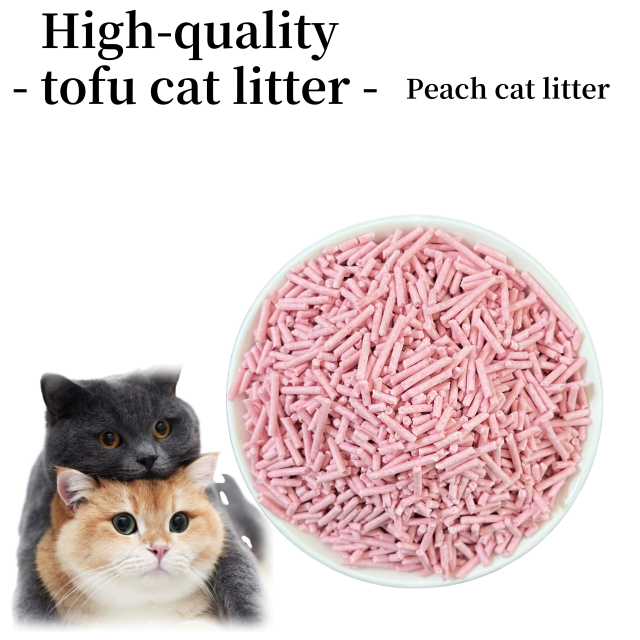
Transitioning gradually improves acceptance, especially for older or texture-sensitive cats. Begin with 25 percent new litter for several days, increase to 50 percent, then 75 percent, and finally complete the switch over 7–14 days. If resistance appears, check box location, adjust depth, or provide an additional box temporarily.
In multi-cat homes, follow the “one box per cat plus one extra” guideline to reduce competition and rejection.
Designing the exit path ensures pellets fall into a capture zone rather than onto open flooring. Use a textured, easy-clean mat with anti-slip backing to collect debris effectively. High-sided boxes reduce scatter, while top-entry boxes may further limit launch exits. Maintain a simple cleaning cadence that includes daily scooping, weekly wipe-downs, and monthly deep cleaning.
While pellet-based litter may have a higher upfront price, total monthly cost depends on waste rate and replacement frequency. Reduced sweeping time, lower dust accumulation, and fewer odor incidents contribute to overall value. Because pea husk materials are plant-based, they may align better with eco-conscious purchasing preferences.
Pea husk pellets are especially suitable for apartments, long-haired cats, and households sensitive to dust, though cats strongly attached to sand-like textures may require gradual adaptation.
Tracking is not inevitable; it is shaped by particle size, weight, dust output, and overall setup strategy. Pea Husk Cat Litter pellets from Zhong Chong Hui (Xuzhou) Biotechnology Co., Ltd. are engineered to reduce paw cling, limit scatter distance, and simplify daily cleanup when used correctly. By choosing high-integrity pellets, optimizing litter box placement, and maintaining consistent maintenance routines, households can significantly reduce sweeping frequency and keep floors visibly cleaner.
If floor cleanliness is your primary goal, run a simple two-week test, measure sweep frequency and trail distance, and evaluate whether pea husk pellets from Zhong Chong Hui (Xuzhou) Biotechnology Co., Ltd. deliver measurable improvement in your home.
A: It uses larger, heavier particles that reduce paw cling and dust spread.
A: Pea Husk Cat Litter uses dense pellets that fall off paws quickly and limit scatter distance.
A: Use a high-sided box, place a textured mat at the exit, and maintain proper litter depth.
A: Pea Husk Cat Litter may cost more per bag, but reduced waste and cleanup can balance the cost.
A: Pea Husk Cat Litter produces less dust and shorter trails, while clay often tracks farther.
A: Transition gradually over 7–14 days and adjust box placement or depth if needed.


