close
Choose Your Site
Global
Social Media
Views: 0 Author: Site Editor Publish Time: 2026-06-10 Origin: Site
Consumer demand for sustainable, low-tracking pet care is fundamentally reshaping retail shelves. Shoppers actively seek plant-based alternatives, driving a massive transition away from traditional clay options. This shift makes high-performance tofu litter a lucrative, high-margin opportunity for growing pet brands. However, navigating this market introduces a significant B2B challenge. Brand managers must formulate a consistent, fast-clumping product at scale. You cannot sacrifice natural ingredient integrity or disrupt supply chain stability during this process. Sourcing the right partner requires technical diligence and industry foresight. Our objective is to provide product managers and procurement leads with a verifiable, actionable framework. You will learn how to evaluate material quality, customize specifications, and source confidently from a reliable clumping tofu cat litter oem.
Rapid, structural clumping relies on the precise ratio of pea/soy fiber to food-grade binders (like guar gum); evaluating this ratio is step one in supplier selection.
Private label litter customization extends beyond packaging to include pellet diameter, moisture-lock capacity, and functional additives.
Mitigating manufacturing risks requires auditing an OEM for strict dust-removal processes, vacuum-seal packaging integrity, and ISO/SGS compliance.
Transitioning from prototype to bulk production demands clear upfront agreements on MOQs, batch consistency tolerances, and transit moisture control.
Modern pet owners gladly pay a premium for convenience and sustainability. Eco-friendly, flushable cat litters command higher retail prices compared to traditional bentonite or silica. Tofu litter specifically offers a compelling value proposition. It utilizes renewable plant fibers, breaks down safely in municipal water systems, and leaves a smaller carbon footprint. This allows retailers to position private label litter as a top-tier lifestyle product. You capture a demographic willing to spend more on their pets while enhancing your brand's environmental credentials.
Creating a generic product rarely wins market share today. Launching a tailored formulation helps you address highly specific consumer pain points. For example, zero-dust formulas cater directly to households managing asthmatic cats or sensitive owners. You might also introduce specific odor neutralizers tailored for multi-cat environments. This level of granular problem-solving builds fierce brand loyalty. When customers find a litter performing exactly as promised, they rarely switch back to cheaper alternatives.
Building in-house production lines demands massive capital expenditure. You must purchase heavy extrusion machinery, install advanced dedusting ventilation, and manage complex raw material logistics. Utilizing an established manufacturing facility removes these barriers instantly. It provides immediate margin benefits and rapid speed-to-market. You leverage their existing economies of scale, bulk raw material pricing, and refined quality control systems. This allows your team to focus exclusively on marketing, distribution, and retail relationship building.
Understanding the physical mechanism behind tofu litter clumping empowers better procurement decisions. The process relies heavily on capillary action within the porous plant fibers. When liquid touches the pellet, the fibers rapidly draw moisture inward. Simultaneously, hydrophilic binders activate upon contact. These binders create a sticky matrix, binding the saturated fibers into a solid mass. Achieving a perfect clump requires exact ratios. Too little binder results in crumbly mess, while too much makes the product sticky and difficult to sift.
Not all plant fibers perform equally. Procurement teams must assess the underlying raw materials carefully. High-grade pea fiber represents the gold standard in modern production. It boasts superior absorption rates, a naturally lighter color, and lower native dust levels. Conversely, standard soy residue often serves as a cheaper alternative. Soy can exhibit slower absorption and carries a distinct, sometimes unpleasant, inherent odor. Specifying pea fiber ensures a more premium end-user experience.
Material Type | Absorption Capacity | Color Profile | Odor Neutrality |
|---|---|---|---|
Premium Pea Fiber | Excellent (Fast wicking) | Light/Cream (Takes dye well) | Highly Neutral |
Standard Soy Residue | Moderate | Darker Tan/Yellow | Earthy/Noticeable Bean Scent |
Corn Starch (Binder) | N/A (Structural support) | White | Neutral |
You must establish strict performance benchmarks during the evaluation phase. We recommend evaluating three primary indicators:
Speed: A premium product should achieve a 2-to-3-second absorption rate. This speed prevents urine from pooling at the bottom of the litter box, which causes sticky, foul-smelling residue.
Integrity: Test the cohesion strength during scooping. A proper clump withstands aggressive sifting without crumbling. This reduces wasted litter and extends the product's lifespan for the consumer.
Safety: Demand non-toxic, food-grade clumping agents. Manufacturers typically use guar gum or starch. Never accept synthetic industrial glues, as pets frequently ingest small particles while grooming their paws.
Metric | Acceptable Range | Testing Method |
|---|---|---|
Clump Time | < 3 Seconds | 20ml saline solution pour test |
Drop Strength | Zero fragmentation | 50cm free-fall drop test |
Moisture Limit | 10% - 12% | Laboratory moisture analyzer |
Best Practice: Always request material safety data sheets (MSDS) for the binding agents used. This verifies food-grade compliance and protects your brand from liability.
Pellet dimensions directly impact the user experience. You must weigh the pros and cons of different diameters when designing your custom pet product. A 1.5mm micro-pellet offers maximum surface area. This leads to incredibly fast clumping and high user satisfaction regarding odor control. However, micro-pellets can track outside the box more easily. A 2.0mm or 3.0mm diameter significantly reduces tracking. They stay inside the box better but may take slightly longer to form a solid clump. Your choice should align with your target customer's primary complaint.
Modern consumers shy away from overpowering artificial fragrances. They prefer natural, functional additives that neutralize odors rather than mask them. Integrating activated carbon provides superior ammonia trapping. Baking soda offers an excellent, cost-effective deodorizing boost. Green tea extracts provide a subtle, fresh scent while offering mild antibacterial properties. Discuss these inclusions early. A reputable manufacturer can blend these additives evenly throughout the extrusion process, ensuring consistent performance in every scoop.
Evaluating packaging options from your chosen bulk cat litter supplier is critical. Tofu litter is highly sensitive to moisture and physical impact. We strongly recommend 6L or 2.5kg vacuum-sealed blocks. This format prevents transit breakage, reduces friction dust, and extends shelf life. Alternatively, custom-printed stand-up pouches with zip-locks appeal to boutique retailers. You can also explore multi-pack boxes for e-commerce, offering a monthly subscription volume. Match the packaging format to your primary sales channel.
Plant-based materials behave differently depending on ambient environmental conditions. The risks of moisture variation between summer and winter productions are substantial. High ambient humidity during manufacturing can lead to prematurely activated binders or mold growth inside the bag. Top-tier facilities mitigate this by utilizing climate-controlled extrusion floors and strict humidity protocols. They monitor the moisture content of the raw fiber before it even enters the hopper. Ask potential partners how they standardize their drying processes across different seasons.
Dust ruins the user experience faster than any other defect. Multiple-stage dedusting processes are absolutely non-negotiable for premium OEM cat litter. The best manufacturers utilize negative-pressure air wash systems. They extract fine particulate matter immediately after the pellets leave the drying oven. They perform a second extraction right before packaging. Skip suppliers who rely solely on mechanical sifting screens, as they often leave significant residual dust.
Overseas shipping presents a hostile environment for plant-based goods. Temperature fluctuations inside a shipping container create condensation, known as "container rain." Protecting vacuum-sealed products during this journey requires proactive measures. Ensure your supplier lines the shipping containers with heavy-duty desiccants. Pallets should receive tight shrink-wrapping. Any breach in the vacuum seal during transit invites moisture ingress, leading to premature spoilage and unsellable inventory.
Common Mistake: Failing to specify pallet configurations. Improper stacking heights can crush bottom-tier boxes, breaking vacuum seals before the container even arrives at your port.
Balancing Minimum Order Quantities (MOQs) is a delicate dance. Custom formulations typically require higher initial MOQs because the factory must halt production to clean lines and mix your specific recipe. You must balance this initial investment with long-term scaling capabilities. Discuss what happens when your sales triple. Can the facility allocate an entire line to your brand? Establish clear expectations regarding lead times for subsequent orders. A good partner grows with you rather than penalizing you for sudden success.
Never rely solely on a polished sales brochure. You must demand verifiable proof of operational excellence. Check for facility ISO 9001 (Quality Management) and ISO 14001 (Environmental Management) certifications. If you sell to major retailers, a BSCI audit ensures ethical labor practices. Most importantly, request recent SGS or Intertek product testing reports. These third-party documents validate claims regarding moisture content, heavy metal absence, and bacterial load limits.
Structure a rigorous, formalized sample-testing phase before signing any contracts. Follow these distinct steps:
Visual & Olfactory Inspection: Check the unsoiled pellets for uniform color, consistent length, and absence of sour odors.
In-House Wet Testing: Inject 20ml of warm water into a tray of the sample. Time the absorption rate using a stopwatch.
The Drop Test: Scoop the resulting clump and drop it from waist height onto a hard surface. It must remain intact.
Odor-Absorption Baseline: Place a mild ammonia solution inside a sealed container with the litter. Evaluate the ambient odor after 12 hours.
A solid contract prevents future disputes. Define acceptable defect rates clearly. Specify what percentage of broken vacuum seals warrants a credit or replacement. Outline explicit lead times for raw material procurement and final production. Finally, address intellectual property. If you develop a unique blend of additives or a proprietary shape, ensure the contract includes strict non-compete clauses. They cannot sell your exact formulation to a competitor.
Successful partnerships rely entirely on aligning your technical specifications with their verifiable manufacturing processes.
Prioritize raw ingredient transparency and proven batch consistency over the lowest-cost bidding to protect your brand equity.
Implement rigorous, standardized physical testing on all samples before committing to a container load.
Take action today: Contact your procurement team and request detailed specification sheets, MSDS documents, and physical samples from shortlisted suppliers to begin a structured evaluation.
A: When stored in optimal conditions, the typical shelf life is 24 months. You must keep the product in a cool, dry environment away from direct sunlight. The integrity of the vacuum seal is crucial. If the seal breaks, ambient humidity will degrade the plant fibers and binders rapidly, reducing the effective shelf life to just a few months.
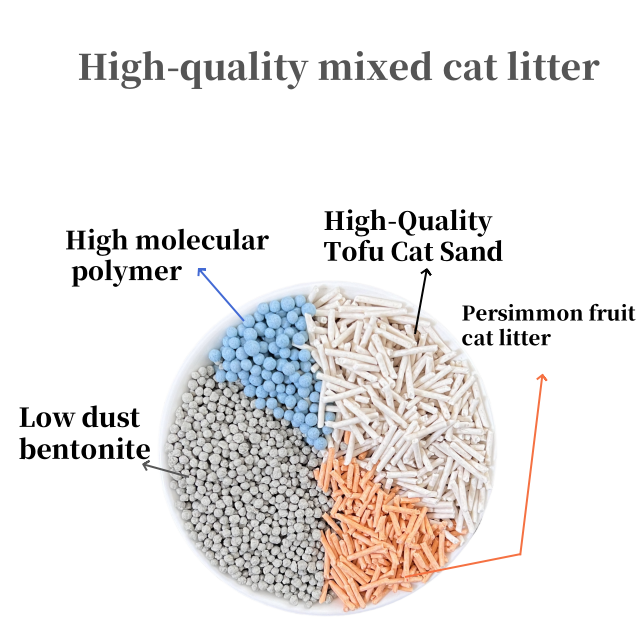
A: Yes, hybrid litters are highly feasible and popular. Blending bentonite improves overall clumping strength and significantly reduces manufacturing costs. However, there is a major trade-off. Adding bentonite compromises the flushability of the product. You must update your packaging claims accordingly, as clay will cause severe plumbing blockages if flushed down residential toilets.
A: Standard MOQs typically range from 10 to 15 tons, which equates roughly to one 20ft shipping container. Fully customized packaging, such as uniquely printed foil bags, often dictates this baseline because printing facilities require minimum film runs. Using generic packaging with custom stickers can sometimes lower the initial product MOQ during the market-testing phase.